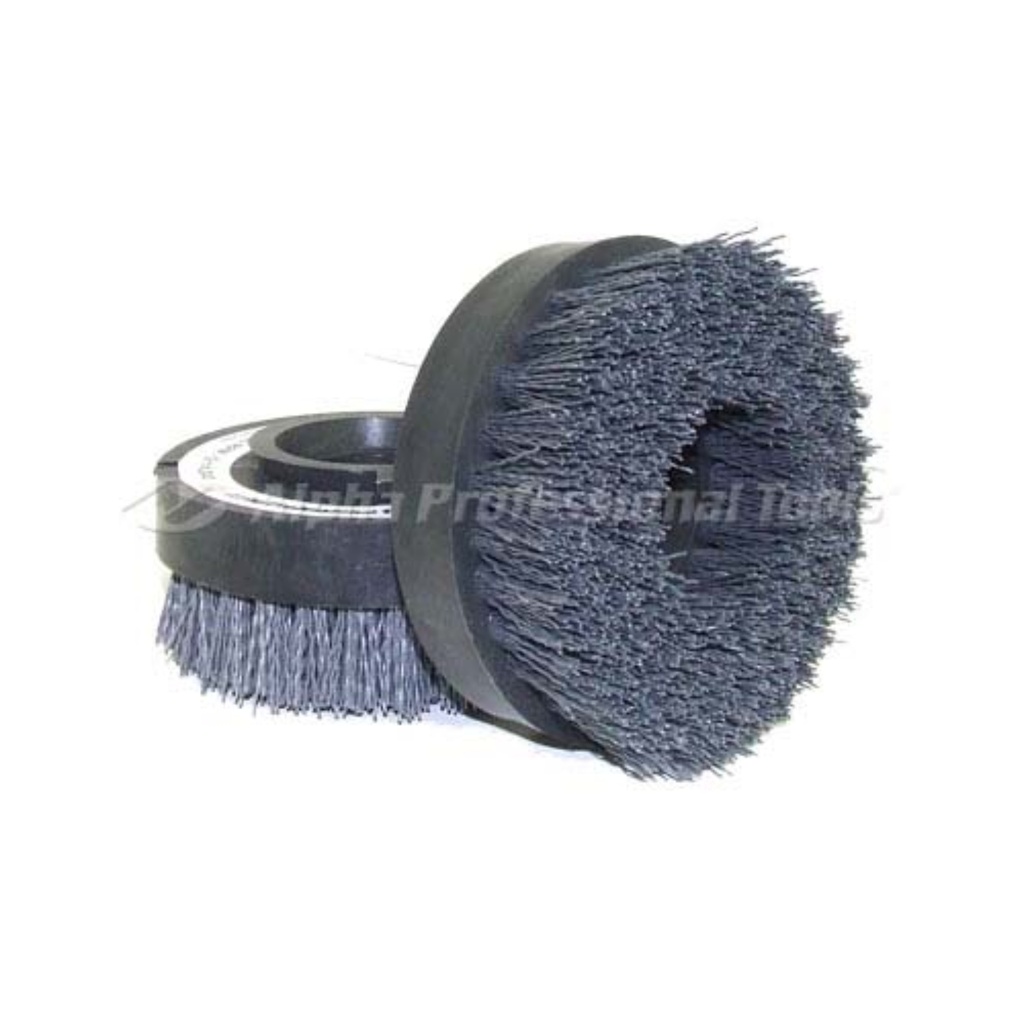
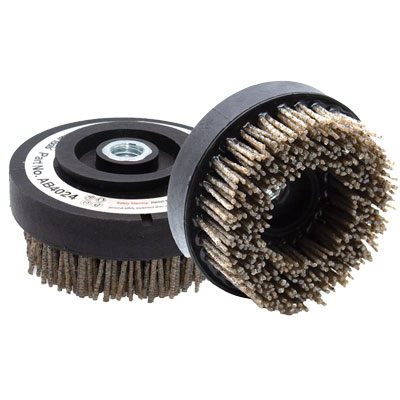
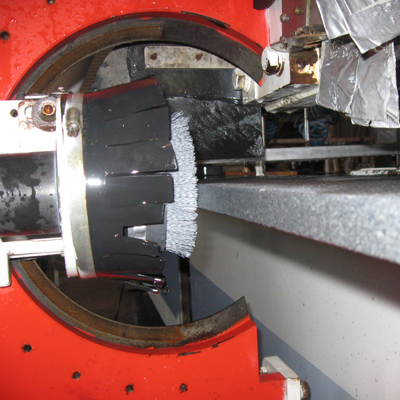
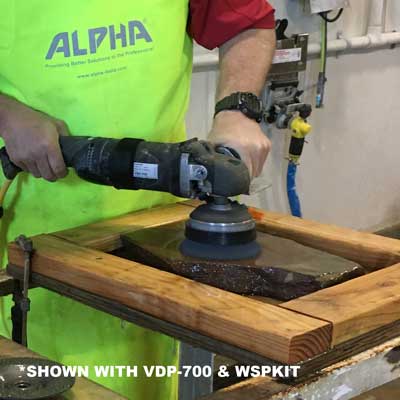
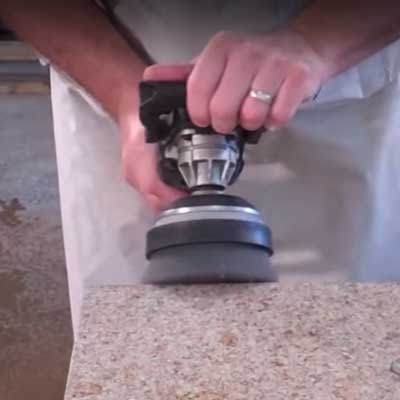
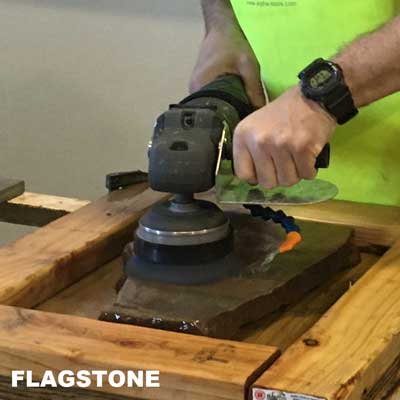
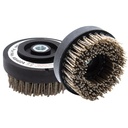
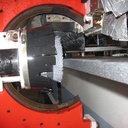
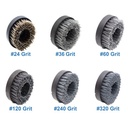
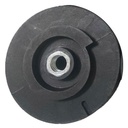
What finish do these wheels create?
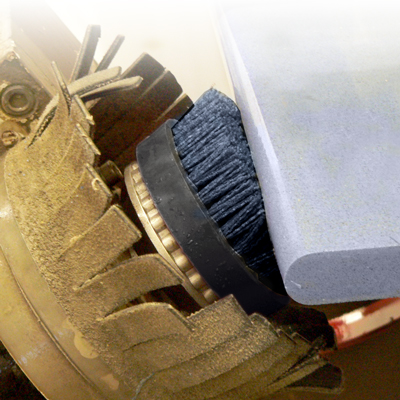
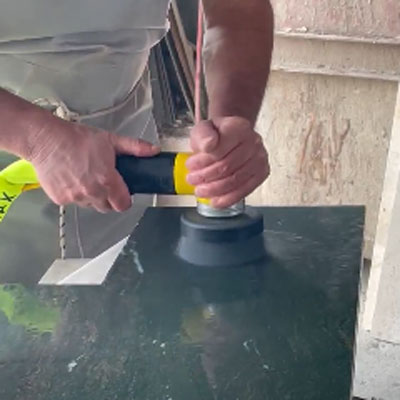
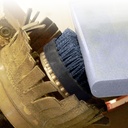
A textured "antique" or "leathered" finish — the surface gains depth and a low-sheen, tactile character. Coarser grits remove more material and leave a deeper texture; finer grits refine the appearance.
Which grit should I start with?
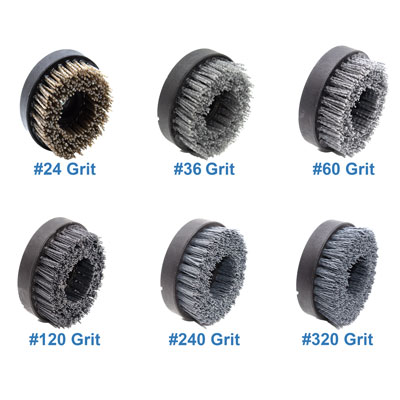
For aggressive antiquing on engineered stone or quartz start with #24 or #36. For lighter texture or refining an existing antiqued surface, start mid-range (#60 / #120) and step up to #240 / #320 for a softer sheen.
Do I have to step through every grit?
You do not have to use all six, but each step removes the scratch pattern of the prior coarser grit. Skipping multiple grits usually leaves a coarser, uneven result.
What tool do I run these on?
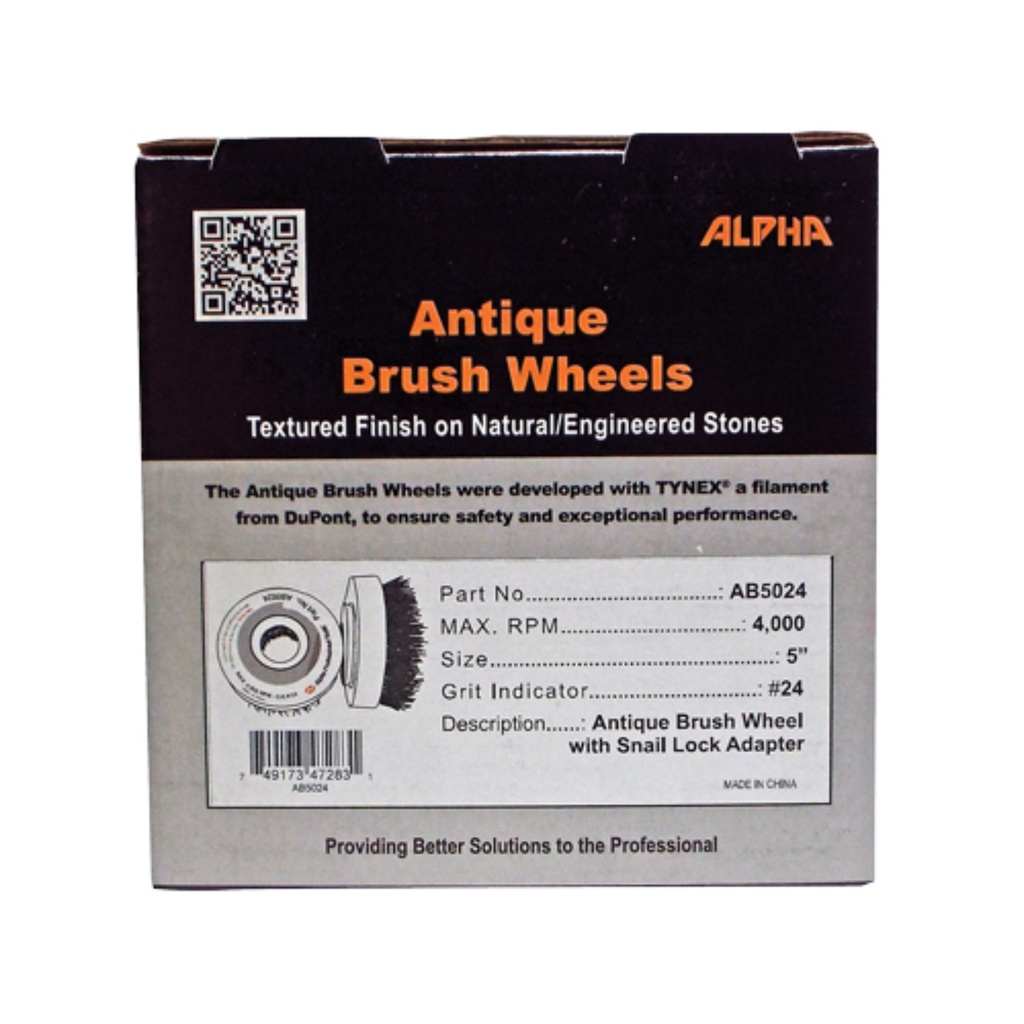
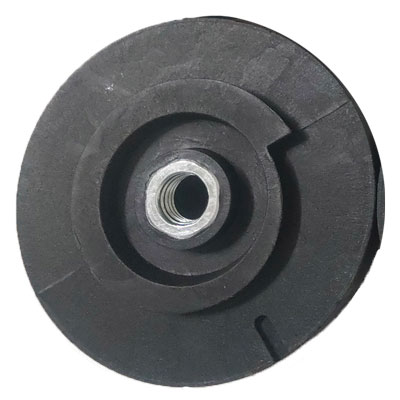
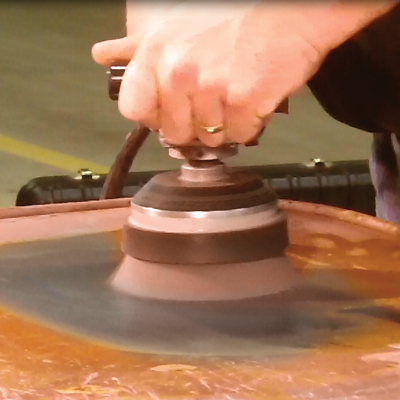
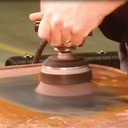
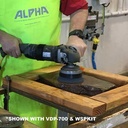
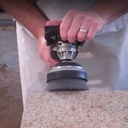
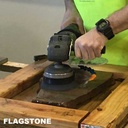
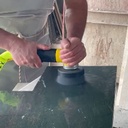
Any edge polisher, hand-held sander or variable-speed angle grinder with a 5/8"-11 spindle that can operate at or below 4,000 RPM. A snail-lock adapter (SFAT-5/8) is required — sold separately.
What is the maximum safe RPM?
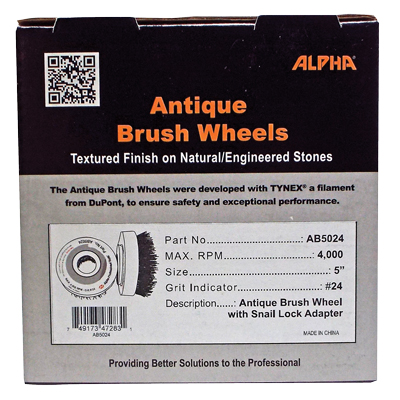
4,000 RPM. Do not exceed.
Can I use these on natural stone, not just engineered?
Yes — they perform well on granite, bluestone, marble and limestone, in addition to engineered stone and quartz.
Wet or dry use?
The vendor does not require water. Most fabricators run these dry or with minimal water for dust control; follow your machine's wet/dry specifications.
What is TYNEX®?
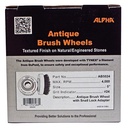
A high-performance abrasive nylon filament manufactured by DuPont. It is engineered to hold abrasive grit and resist breakage at operating speed.
Is a 5" version available?
Yes — the AB5xxx series (5") is sold as a separate listing.