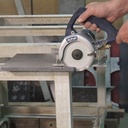
Which way do I install the blade on my tool?
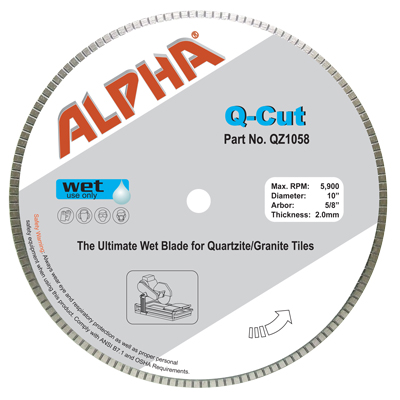
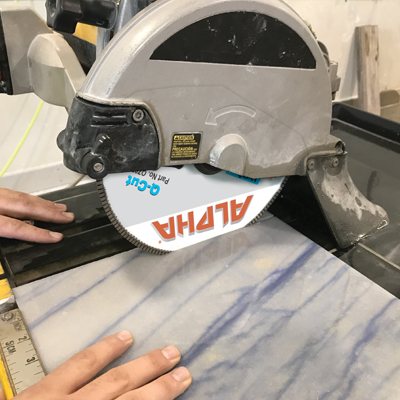
The blade direction is printed on the front of the blade. Install the blade so that it follows this direction. If the front is no longer legible, a directional arrow is embossed into the back. As a last resort, examine the diamonds: the bond tail behind each diamond should point opposite to the direction of rotation. Installing the blade backwards reverses the bond tails and may cause premature wear.
What materials can I cut with the Alpha® Q-Cut blade?
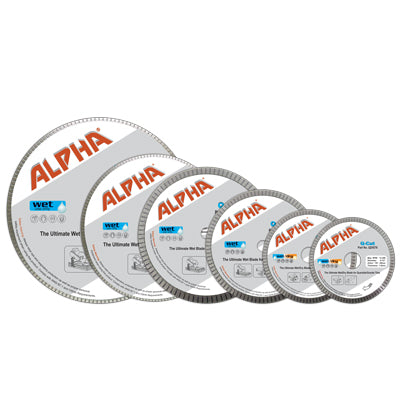
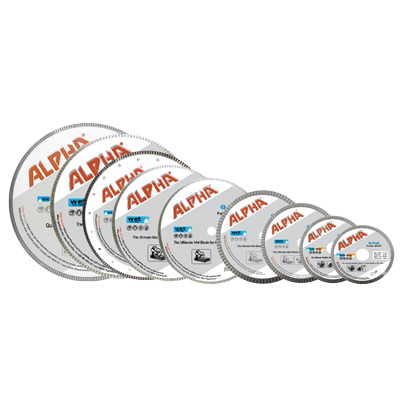
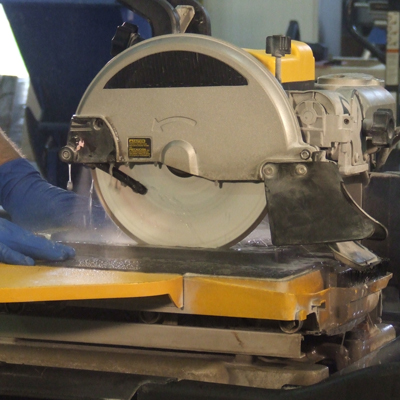
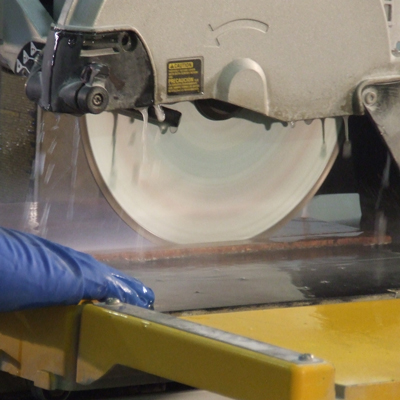
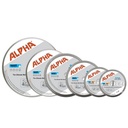
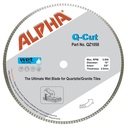
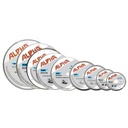
The Q-Cut wet blade series is primarily designed for granite, marble and engineered stone slabs or tiles. The Q-Cut 4-1/2" and 5" blades are designed for porcelain and ceramic tiles and may be used either wet or dry.
Can I cut Onyx with the Alpha® Q-Cut blade?
No. We do not recommend cutting Onyx with Q-Cut blades due to the aggressive cutting action, diamond grit size and turbo rim style. For Onyx, use the Alpha® Vetro blade designed for glass: its continuous rim with finer diamonds minimizes edge chipping.
Can I use the Alpha® Q-Cut blade dry?
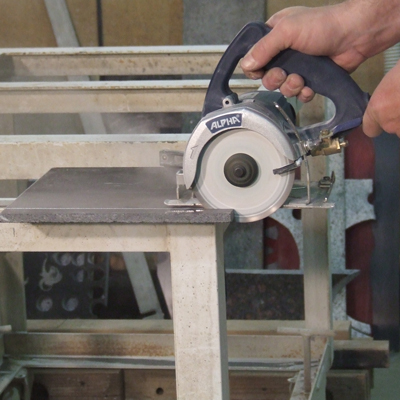
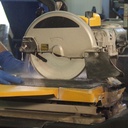
The 4-1/2" and 5" Q-Cut blades can be used wet or dry on hand power tools such as the Alpha® AWS-110, AWS-125 and high-speed angle grinders. The 12" QZ1201 is also rated Wet/Dry. All other Q-Cut sizes must be used wet at all times.
My cut is slowing down. What can I do?
The diamonds have rounded over or glazed and the blade is losing its cutting ability. Re-dress the blade by making a few cuts into a soft abrasive material such as a dressing stone or concrete block to expose fresh diamonds.
What is the maximum RPM for each Q-Cut blade?
See the Max RPM column in the Models / Part Numbers table above — values range from 5,900 RPM (10") up to 13,200 RPM (4-1/2"). Never exceed the rating printed on the blade.
What arbor sizes are available?
Arbor availability varies by diameter — see the Arbor column in the Models / Part Numbers table.